
Table of Contents
A New Era of Public Relations is Here
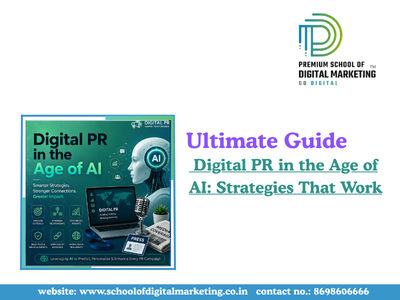
Artificial Intelligence (AI) is transforming Digital PR, making it faster, smarter, and more data-driven than ever before. Today, brands can identify the right journalists, analyze media trends, personalize outreach, and measure campaign performance using AI-powered tools tasks that once required significant time and manual effort.
This shift has fundamentally changed how businesses approach public relations. Instead of relying on mass email campaigns and hoping for media coverage, organizations now use AI-driven insights to connect with the most relevant publications and create more targeted, effective PR campaigns. As a result, Digital PR has become an essential strategy for building brand authority, earning high-quality backlinks, and improving online visibility.
Leading digital marketing institutes, including the School of Digital Marketing, now teach AI-powered Digital PR as a core skill for modern marketers. By combining artificial intelligence with strategic thinking, compelling storytelling, and genuine media relationships, businesses can achieve measurable results that support long-term SEO performance and sustainable business growth. In this article, we’ll explore how AI is reshaping Digital PR and the strategies that deliver real results.
Understanding Digital PR in the AI Age
What exactly do we mean when we talk about digital PR with artificial intelligence? At its core, digital PR in the age of AI is about using smart technology to make smarter decisions about media relations, brand reputation, and audience engagement.
Unlike traditional PR where you’d manually research journalists, send generic press releases, and hope for the best AI-driven digital PR enables you to work smarter. It automates the tedious research, surfaces the right opportunities automatically, and lets you focus on the creative, strategic work that actually moves the needle.
The real magic happens when machine learning algorithms analyze thousands of data points publication history, journalist preferences, audience demographics, engagement patterns to identify opportunities perfectly matched to your brand.
Five Game-Changing Digital PR Strategies Using AI
Strategy One: Media Monitoring That Actually Stays Awake
Imagine if your brand monitoring system never slept, never got tired, and caught every single mention within seconds. That’s real-time AI monitoring. Instead of checking your brand mentions once a day (or worse, once a week), advanced AI algorithms scan news sites, blogs, social platforms, and industry publications 24/7. The system detects sentiment shifts instantly. If your brand is mentioned negatively, you know about it within minutes, not after your boss forwards you an email the next morning.
This matters because crisis situations are like fires early detection changes everything. When sentiment shifts negative, you can respond proactively rather than scrambling in reactive mode.
Strategy Two: Finding the Right Journalists (Actually)
Here’s something that used to require hours of research and a lot of guesswork: figuring out which journalists would actually care about your story.
AI changes this completely. Advanced AI tools analyze thousands of journalists and influencers to find your perfect matches. The algorithms don’t just look at job titles they analyze actual coverage history, audience demographics, engagement patterns, and even the specific topics they write about most frequently.
The difference in outcomes is substantial. Instead of sending 100 generic pitches hoping someone bites, you might send 10 highly targeted pitches with a 60% higher response rate. Those are odds that actually work in your favor.
Strategy Three: Predicting What Stories Will Actually Matter
Content strategy used to be part science, part art, part guessing. You’d brainstorm angles, pitch them to journalists, and see what stuck. Predictive AI changes this game. By analyzing trending topics, search behavior, social signals, and historical coverage patterns, these systems can actually predict which story angles will generate maximum media interest. It’s like having a crystal ball, except it’s based on data.
The system identifies not just what angles work, but when to publish them, which formats different outlets prefer, and which channels will amplify your message most effectively. A story about your company innovation might work best as a longer-form feature in one publication, a brief news mention in another, and a three-part series elsewhere.
Want to master AI-powered Digital PR?
🚀 Join our FREE Digital Marketing Demo and learn how to build authority, earn quality backlinks, and grow your brand using AI-driven strategies.
Strategy Four: Relationships on Autopilot (But Still Personal)
One of the biggest misconceptions about AI in PR is that it removes the human touch. Actually, the opposite is true. Good AI handles the grunt work so you can focus on genuine relationships.
AI-powered CRM systems maintain journalist relationships through intelligent automation. The system reminds you to follow up with contacts you haven’t spoken to in months. It remembers that Sarah at TechNews covers AI topics and prefers story pitches in the morning. It knows that Mike from BusinessDaily published three stories similar to your upcoming angle, so you should reach out to him specifically.
Strategy Five: Smart Distribution That Reaches the Right People
Here’s the thing about content distribution: not every piece works equally well on every platform. A long-form investigative story you want in a major publication is different from a quick news alert you want shared on social media.
AI algorithms optimize each piece for different channels. They determine the ideal timing for each platform, suggest format adaptations, and recommend the best distribution sequence. Rather than publishing everything the same way on all channels, AI ensures your message reaches the right audience in the format they prefer on the channel where they actually consume content.
Questions People Actually Ask About AI in Digital PR
How much does AI actually improve your digital PR results?
The improvement is substantial. AI accelerates journalist discovery what used to take research assistants hours happens in seconds. Real-time monitoring gives you visibility into your brand’s reputation as it actually happens. Predictive analytics help you avoid wasting time on story angles nobody cares about.
Which tools should we actually use?
This depends on your needs, but the leaders in the space include Meltwater for real-time media monitoring they excel at showing you what’s being said about your brand across thousands of sources. Cision offers an impressive journalist database with AI-powered matching that saves enormous research time.
Can AI actually replace PR professionals?
Short answer: no. And honestly, any AI tool that suggests it can is overselling.
Here’s why: AI is phenomenal at handling data analyzing millions of mentions, researching thousands of journalists, identifying patterns in trends. Humans are irreplaceable at the strategic and creative work.
What kind of ROI should you realistically expect?
Organizations implementing AI-powered digital PR strategies typically see 250-400% ROI improvement. This comes from several places: campaigns execute faster (fewer people doing research means more time on actual PR work), placement accuracy improves (better targeting means better outcomes), and resources go further (you’re accomplishing more with your team).
Keep learning, keep growing!
💡 Check out our latest blogs On Google Search Console Social & Video Reports Guide
How to Actually Implement This
If you’re thinking “this sounds great, but where do I start?” here’s a practical roadmap:
Week One: Audit What You’re Actually Doing
Spend a few days documenting how you currently work. How much time does your team spend researching journalists? How long does it take from identifying a story opportunity to actually pitching it? How do you currently monitor your brand’s media presence? Where are the biggest time sinks?
This audit isn’t about making people feel bad it’s about identifying where AI can help most. Maybe your team spends 15 hours a week on journalist research. That’s where you start.
Weeks Two-Three: Choose Your First Tool
Don’t try to solve everything at once. Pick one problem and solve it. If journalist research is your biggest time sink, start with a journalist database tool with AI matching. If monitoring is chaotic, invest in a real-time monitoring platform.
Start with a tool that offers a solid trial period so you can actually test it with your workflow before committing.
Week Four: Integration and Training
Implement the tool with your team. Do a real training session not just “here’s the login,” but actually showing people how it changes their workflow and what they should do differently.
Establish clear protocols: When should they use AI recommendations? When should they override the algorithm? What does success look like for this tool?
Month Two: Measure Baseline Performance
Before you can improve something, you need to know where it currently stands. Define your key metrics:
- How many journalists are you reaching per campaign?
- What’s your average response rate?
- How long does it take from story ideation to first pitch?
- What’s your earned media value trending?
Month Three and Beyond: Refine and Expand
Review what’s working. Some AI recommendations will be gold. Others you’ll learn to ignore. That’s normal. Refine based on actual results, not assumptions. Once this first tool is working well, you have options to expand to other areas.
The Bottom Line
Digital PR in the age of AI represents something bigger than just using new tools. It’s about fundamentally rethinking how professional communicators work. The modern school of digital marketing teaches that AI mastery isn’t optional it’s the baseline.
The five strategies we’ve covered smart monitoring, intelligent targeting, predictive content, automated relationships, and strategic distribution aren’t theoretical. They’re working today for organizations of every size, from startups to enterprises.
Here’s what successful implementation looks like: your team spends less time on research and administrative tasks, and more time on the creative, strategic, relationship-building work that actually drives results. Your campaigns move faster. Your placements improve in quality. Your ROI gets better.
Ready to become an AI-driven marketer?
Discover practical AI tools, Digital PR strategies, and SEO techniques in our FREE live demo session conducted by industry experts.