
Table of Contents
LinkedIn is no longer just a platform for sharing resumes, searching for jobs, or connecting with colleagues. It has become an important space for professionals, entrepreneurs, freelancers, marketers, and business owners to share knowledge, build credibility, attract opportunities, and grow their personal brands.
But building a strong presence on LinkedIn takes more than posting occasionally. You need a clear strategy, relevant content, consistent communication, and an understanding of what your audience wants to learn.
This is where artificial intelligence (AI) can make a difference.
AI tools can help you generate content ideas, improve your LinkedIn profile, write engaging posts, plan a content calendar, analyze performance, and communicate more effectively with your target audience. When used thoughtfully, AI can save time while helping you build a professional identity that reflects your expertise and personality.
In this guide, we will explore how to use AI for LinkedIn marketing and personal branding, which tasks you can automate, what tools you can consider, and how students and marketing professionals can use these skills to grow their careers.
What is AI-Powered LinkedIn Marketing?
AI-powered LinkedIn marketing is the use of artificial intelligence tools to plan, create, improve, distribute, and analyze LinkedIn content and marketing activities.
Instead of handling every task manually, professionals can use AI to support activities such as content research, headline writing, post creation, audience analysis, and performance reporting.
For example, a digital marketer can use an AI writing assistant to develop post ideas for the coming month, refine a LinkedIn profile headline, or turn a long article into several short posts.
However, AI should support your marketing strategy rather than replace your professional judgment. Your real experiences, original opinions, industry knowledge, and conversations with people are what make your personal brand distinctive.
Why is AI Important for LinkedIn Personal Branding?
Personal branding is the process of building a recognizable professional identity around your skills, experience, values, and expertise.
On LinkedIn, your personal brand influences how potential employers, clients, collaborators, and industry peers perceive you.
AI can help you strengthen that identity in several ways.
1. Create content more consistently
Many professionals know they should post regularly but struggle to find fresh ideas. AI can suggest topics based on your industry, target audience, professional goals, and frequently discussed challenges.
You can use these suggestions to create educational posts, industry observations, practical tips, and professional stories.
2. Improve your LinkedIn profile
AI can help you rewrite your headline, About section, experience descriptions, and featured content descriptions to make them clearer and more relevant.
For example, instead of writing “Digital Marketing Professional,” you could use a more descriptive headline such as:
“Digital Marketing Specialist | SEO, Content Strategy and Lead Generation | Helping Businesses Build Their Online Presence”
Your final headline should accurately represent your skills and experience rather than include qualifications you do not possess.
3. Understand your audience
AI can help organize audience feedback, summarize publicly available industry discussions, identify recurring questions, and group content ideas by topic.
This makes it easier to create posts that address genuine professional challenges instead of publishing content without a clear purpose.
4. Save time on repetitive marketing tasks
Drafting captions, organizing content calendars, summarizing reports, and preparing post variations can take considerable time.
AI can speed up these activities, leaving more time for networking, research, creative thinking, and relationship building.
5. Make data-informed decisions
AI can help interpret LinkedIn analytics exports and identify patterns in impressions, engagement, profile visits, and other available metrics.
These insights can help you understand which subjects attract attention and which content formats deserve further experimentation.
10 Practical Ways to Use AI for LinkedIn Marketing and Personal Branding
1. Optimize Your LinkedIn Profile With AI
Your LinkedIn profile is often the first place people look when they want to learn more about you. A well-written profile communicates what you do, whom you help, and what makes your experience valuable.
You can use an AI assistant to review your existing profile and suggest improvements to your headline, About section, work experience, skills, and featured content.
Start by providing accurate details about your professional background, achievements, target audience, and career goals. Ask the tool to make your profile more specific, readable, and relevant to your intended audience.
Example AI prompt:
“Act as a LinkedIn profile optimization expert. Review my profile details and suggest a professional headline, an engaging About section, and improvements to my experience descriptions. My target audience is [audience], my key skills are [skills], and my professional goal is [goal]. Keep the writing natural, credible, and specific.”
Always check the suggestions carefully. Your profile should represent your actual experience, not a generic description of an ideal candidate.
2. Generate Relevant LinkedIn Content Ideas
Coming up with new content ideas every week can be challenging, especially when you are managing multiple marketing responsibilities.
AI can help you brainstorm topics around your industry, audience questions, current projects, professional lessons, and frequently misunderstood concepts.
For example, a digital marketing professional might create content around:
- Common SEO mistakes that affect website visibility.
- Practical ways to improve website conversion rates.
- Lessons learned from a digital marketing campaign.
- How AI is changing content marketing.
- LinkedIn marketing strategies for small businesses.
- Career advice for aspiring digital marketers.
Instead of asking AI for random post ideas, give it a clear audience and objective.
Example AI prompt:
“Suggest 20 LinkedIn post ideas for a digital marketing professional targeting small business owners and marketing students. Organize the ideas into educational posts, personal experiences, industry insights, case studies, and engagement-focused questions. Make every idea practical and distinct.”
Use the resulting list as a starting point. Add your own examples, observations, and opinions before publishing.
3. Write Better LinkedIn Posts With AI
LinkedIn content does not always need to be lengthy or complicated. A useful post can explain a lesson, answer a question, share a professional experience, or offer a practical solution.
AI can help you develop a first draft, improve sentence structure, simplify technical concepts, and explore different ways to communicate the same message.
A useful LinkedIn post structure is:
- Opening: Introduce a relevant problem, observation, or question.
- Context: Explain why the subject matters.
- Value: Share practical advice, an example, or a lesson.
- Takeaway: Summarize the main point.
- Conversation: Invite readers to share their experiences when appropriate.
For example, instead of posting “AI is transforming digital marketing,” explain one task where AI helped you save time, what you learned, and what other marketers could apply.
Example AI prompt:
“Draft a LinkedIn post explaining three practical ways AI can help digital marketers save time. Use a conversational professional tone, include one realistic example, avoid exaggerated claims, and finish with a relevant question. Do not invent personal experiences or statistics.”
Remember that AI-generated writing often needs editing. Remove repetitive sentences, unsupported claims, unnecessary jargon, and phrases that do not sound like you.
4. Create a LinkedIn Content Calendar
Consistency becomes easier when you plan your content instead of deciding what to post at the last minute.
AI can help organize topics into a weekly or monthly content calendar. You can assign different themes to different days and align them with your marketing or career goals.
For example:
| Day | Content theme | Example topic |
|---|---|---|
| Monday | Education | Three common SEO mistakes |
| Tuesday | Personal branding | A lesson from your career |
| Wednesday | Industry insights | A practical AI marketing trend |
| Thursday | How-to content | Improving a LinkedIn profile |
| Friday | Engagement | A professional question or discussion |
This is only a sample schedule. Choose a posting frequency that you can maintain without compromising content quality.
Example AI prompt:
“Create a four-week LinkedIn content calendar for a digital marketing professional. Include the topic, target audience, content format, objective, and a suggested opening line for each post. Balance educational content, personal branding, industry insights, and professional storytelling.”
Review the calendar regularly and adjust it based on audience feedback, industry developments, and your own experiences.
5. Use AI to Improve LinkedIn Engagement
Building a personal brand is not just about publishing posts. It also involves participating in conversations and developing meaningful professional relationships.
AI can help you prepare thoughtful responses to comments, summarize discussions, and identify useful follow-up questions.
For example, if someone comments on your post about SEO, you could ask an AI assistant to suggest three possible responses: one that adds a practical example, one that respectfully expands the discussion, and one that asks a relevant follow-up question.
However, you should review and personalize every response before posting it. Generic, repetitive comments can make your interactions feel automated and insincere.
Avoid using AI to generate large volumes of irrelevant comments or unsolicited messages. Genuine professional conversations are more valuable than superficial engagement.
6. Repurpose Existing Content With AI
Creating a new piece of content for every platform can be time-consuming. AI makes it easier to adapt useful material into different formats.
For example, one detailed blog post can become:
- Three educational LinkedIn posts.
- A short LinkedIn newsletter.
- A carousel outline.
- A checklist for professionals.
- A short video script.
- A series of frequently asked questions.
The key is to adapt the content to the format rather than simply copying and pasting the same text everywhere.
If you turn a blog into a LinkedIn carousel, for example, focus on one clear idea per slide and make the information easy to understand.
Example AI prompt:
“Repurpose the following original blog article into five distinct LinkedIn posts. Give each post a different angle, audience takeaway, and opening line. Preserve the factual meaning, avoid repeating the same examples, and suggest a suitable visual format for each post.”
Check the source material and verify any claims before publishing the adapted content.
7. Develop a Distinctive Personal Brand Voice
One common problem with AI-generated content is that it can sound polished but impersonal. If your posts use the same expressions and structure as everyone else’s, it becomes harder to stand out.
To avoid this, establish a clear personal brand voice.
Ask yourself:
- Do you want to sound educational, analytical, approachable, or inspirational?
- Which professional topics do you understand particularly well?
- What experiences have influenced your perspective?
- Which principles guide your work?
- What do you want people to remember about you?
You can give an AI assistant examples of your own writing and ask it to identify your tone, vocabulary, sentence length, and communication style.
Example AI prompt:
“Analyze the writing samples below and describe my communication style. Identify my tone, typical sentence structure, vocabulary, and preferred way of explaining ideas. Use these observations to help edit future drafts while preserving my personality and original meaning.”
Do not ask AI to manufacture a personal story. Your experiences and professional opinions should come from you.
8. Use AI to Understand LinkedIn Performance
Posting regularly is useful, but measuring results helps you understand whether your strategy is working.
Depending on the analytics available for your LinkedIn account, you may be able to review metrics such as impressions, reactions, comments, reposts, follower growth, profile activity, and clicks.
You can export or manually organize available data and ask an AI tool to identify trends.
For example, you could compare the performance of educational posts with personal stories or analyze which topics generate meaningful comments from your intended audience.
Example AI prompt:
“Analyze this LinkedIn content performance dataset. Compare engagement across topics and content formats, identify patterns and outliers, and recommend three experiments for next month. Explain the limitations of the data and do not assume that correlation proves causation.”
Use these findings to guide experiments, not to treat every recommendation as a guaranteed result.
Also, do not assume that the post with the most impressions is necessarily the most successful. Your objective might be attracting relevant profile visits, building industry credibility, generating qualified enquiries, or strengthening professional relationships.
9. Support LinkedIn Lead Generation With AI
For consultants, agencies, freelancers, and B2B businesses, LinkedIn can be an important channel for discovering prospects and developing professional relationships.
AI can help you define an ideal customer profile, research publicly available company information, prepare relevant conversation starters, and draft personalized outreach messages.
For example, a marketing consultant might use AI to organize potential clients by industry, company size, marketing challenges, and service requirements.
The goal should be relevance, not message volume.
A useful outreach message briefly explains why you are contacting the person, refers to a relevant professional context, and opens the door to a conversation without making exaggerated promises.
Avoid sending bulk, generic pitches or pretending to have a personal relationship that does not exist. Follow LinkedIn’s rules and respect people’s communication preferences.
10. Use AI to Build a Long-Term LinkedIn Marketing Strategy
Individual posts can help you attract attention, but a consistent strategy gives your personal brand direction.
Begin by defining what you want LinkedIn to achieve. Your goal might be to find a job, attract clients, establish industry expertise, grow a professional network, or promote a business.
Next, identify your target audience and choose three to five content pillars that reflect your knowledge and audience needs.
For example, a digital marketing educator could focus on SEO, AI tools, campaign strategy, career development, and practical marketing projects.
Use AI to support research, brainstorming, drafting, and reporting. Then establish a review process to verify facts, add original insights, and maintain a consistent publishing schedule.
Over time, assess whether your content is attracting the right audience and supporting your professional objectives.
Want to Learn How AI Can Recommend Your Brand?
Join our Free Demo Session and discover practical strategies to improve your brand’s visibility across ChatGPT and AI-powered search.
Best AI Tools for LinkedIn Marketing
Different tools are useful for different stages of your workflow. You do not need to use every tool; start with the tasks that take you the most time.
| AI tool or platform | How it can help |
|---|---|
| ChatGPT | Brainstorming, drafting posts, developing content calendars, and refining ideas |
| Microsoft Copilot | Assisting with writing, summarization, and compatible Microsoft 365 workflows |
| Canva AI features | Creating and refining social media graphics and carousel visuals |
| Grammarly | Improving grammar, clarity, and writing tone |
| LinkedIn’s available analytics | Understanding content performance and professional audience activity |
| Spreadsheet tools with AI features | Organizing campaign data and identifying performance patterns |
Features, pricing, integrations, and availability may change. Check each provider’s current documentation before selecting a tool.
Use tools only where they add value. A clear strategy and a good understanding of your audience matter more than the number of AI applications you use.
How Students and Digital Marketers Can Benefit From AI-Powered LinkedIn Marketing
AI-powered LinkedIn marketing is a valuable skill for students, job seekers, freelancers, entrepreneurs, and working professionals who want to strengthen their digital presence.
Students can use LinkedIn to share project work, discuss what they are learning, demonstrate practical skills, and connect with professionals in their chosen fields.
Job seekers can improve the clarity of their profiles, communicate relevant experience, and publish thoughtful posts about their areas of interest.
Freelancers and business owners can explain their services, share useful industry insights, demonstrate expertise, and build relationships with potential clients.
Digital marketing professionals can combine AI-assisted content creation with SEO, social media marketing, analytics, paid advertising, and lead generation to develop a broader marketing skill set.
For beginners, learning the fundamentals of digital marketing is just as important as learning how to use AI. Understanding audience research, content strategy, keyword intent, analytics, and campaign objectives helps you use AI more effectively.
If you are exploring professional training, you can compare a digital marketing institute in Pune, a digital marketing institute in Mumbai, a digital marketing institute in Nashik, or a digital marketing institute in Nagpur based on curriculum, practical projects, trainer experience, and career support.
Similarly, when comparing a digital marketing course in Pune, a digital marketing course in Mumbai, a digital marketing course in Nashik, or a digital marketing course in Nagpur, look for a program that covers both core marketing principles and modern AI-assisted workflows.
The right choice depends on your location, learning preferences, budget, schedule, and career goals. Look beyond course titles and check whether the training includes hands-on assignments, real-world examples, and opportunities to build a portfolio.
Common Mistakes to Avoid When Using AI for LinkedIn Marketing
AI can improve productivity, but careless use can weaken your credibility.
Publishing unedited AI-generated content
Automatically generated posts may contain generic statements, repetitive wording, or inaccurate information. Review each draft and add your own perspective.
Inventing achievements or personal experiences
Never publish fictional client results, qualifications, professional stories, or campaign statistics as if they were real. Accuracy is essential to building trust.
Focusing only on likes and impressions
High engagement does not always translate into professional opportunities. Track the metrics that align with your actual objectives.
Using the same content for every audience
A post designed for marketing executives may not work equally well for students or small business owners. Adapt your examples, language, and level of detail to the intended audience.
Over-automating networking
AI-generated messages can be helpful starting points, but professional relationships depend on relevance, context, and genuine interaction.
Ignoring privacy and confidentiality
Do not upload private client information, confidential business documents, personal contact data, or sensitive company details to an AI tool unless you are authorized to do so and the tool’s data-handling terms are appropriate.
Expecting instant results
A strong personal brand develops through useful contributions, consistent communication, and meaningful professional relationships. AI can make the process more efficient, but it cannot guarantee followers, leads, or career opportunities.
Keep learning, keep growing!
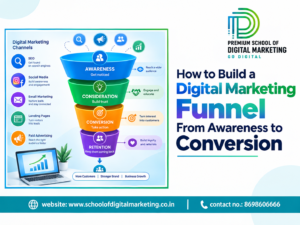
Check out our latest blogs On How to Build a Digital Marketing Funnel From Awareness to Conversion
The Future of AI in LinkedIn Marketing and Personal Branding
AI is making it easier to research topics, create content, organize marketing workflows, and interpret performance data. As these capabilities develop, marketers will have more opportunities to personalize communication and make better-informed decisions.
At the same time, content quality, subject knowledge, credibility, and genuine human interaction will remain important.
Professionals who combine AI efficiency with original thinking are better positioned to create useful content than those who rely entirely on automated output.
The aim is not to make your LinkedIn presence look busier. It is to make your communication more relevant, your expertise easier to understand, and your professional relationships more meaningful.
Conclusion
AI can be a powerful assistant for LinkedIn marketing and personal branding when it is used with a clear purpose. It can help you improve your profile, generate content ideas, write better posts, plan a publishing schedule, understand performance, and support professional networking.
However, your personal brand should always reflect your real knowledge, values, and experiences. Let AI handle repetitive tasks and support your creative process, while you remain responsible for the ideas, decisions, and relationships that define your professional identity.
If you are beginning your digital marketing journey, start with one practical step: optimize your LinkedIn profile, choose a few content pillars, and publish useful content consistently. As your skills develop, explore how AI can help you work more efficiently and make informed marketing decisions.
The strongest personal brands are not built by AI alone. They are built by people who use technology thoughtfully to communicate what they know and why it matters.
Want to Learn How Brands Can Win in the AI Era?
Take your digital marketing skills to the next level with our AI-Powered Digital Marketing Course.
Frequently Asked Questions (FAQs)
1. How can AI be used for LinkedIn marketing?
AI can support LinkedIn marketing by generating content ideas, drafting posts, optimizing profile descriptions, planning content calendars, summarizing audience discussions, analyzing performance data, and preparing personalized outreach messages. Human review is important for accuracy, originality, and authenticity.
2. Which AI tools are best for LinkedIn personal branding?
ChatGPT can help with brainstorming and writing, Canva’s AI features can support visual content creation, and Grammarly can help refine writing. LinkedIn’s available analytics can help you evaluate performance. The best combination depends on your goals, workflow, budget, and the features currently available.
3. Can AI write LinkedIn posts that sound human?
Yes. AI can help create natural-sounding drafts when you provide a clear audience, topic, tone, and objective. To make the content genuinely personal, add your own experiences, examples, opinions, and insights, then edit the final draft in your own voice.
4. How often should I post on LinkedIn when building a personal brand?
Choose a realistic posting schedule that you can maintain consistently. Start with one or two useful posts per week if that suits your workload, and adjust based on your audience, available time, and results. Content quality and meaningful engagement matter more than posting simply to meet a quota.
5. Does AI-generated LinkedIn content help with SEO?
AI can help improve content clarity, topical coverage, and keyword research, but AI-generated content does not automatically rank well. LinkedIn visibility and website SEO depend on multiple factors, including relevance, usefulness, audience engagement, competition, and the platform or search engine involved. Prioritize helpful content over keyword repetition.
6. How can students use LinkedIn to build a personal brand?
Students can share academic projects, practical assignments, internships, certifications, industry observations, and lessons learned. They can also connect with professionals, participate in relevant discussions, and use AI to improve the presentation of their work without exaggerating their experience.
7. Is learning AI important for a digital marketing career?
AI literacy is increasingly useful because it can support content creation, research, reporting, campaign planning, and other marketing tasks. However, AI skills should complement fundamentals such as SEO, audience research, analytics, paid advertising, communication, and strategic thinking.
8. How do I choose a digital marketing course in Pune, Mumbai, Nashik, or Nagpur?
Compare the course curriculum, practical assignments, trainer expertise, AI tool coverage, industry exposure, student reviews, schedule, and career support. Choose a program that matches your goals and offers opportunities to apply your learning to realistic marketing projects.
9. What is the difference between AI-powered LinkedIn marketing and traditional LinkedIn marketing?
Traditional LinkedIn marketing may rely more heavily on manual research, content drafting, planning, and reporting. AI-powered marketing uses AI to assist with these tasks, potentially reducing repetitive work and supporting analysis. Both approaches require a clear strategy, relevant content, and human judgment.
10. Can AI help generate leads through LinkedIn?
AI can help define target audiences, organize prospect research, draft relevant messages, and identify potential conversation topics. Lead generation still depends on the relevance of your offer, the quality of your relationships, appropriate outreach, and the needs of your prospects. AI cannot guarantee leads or conversions.
11. What are the biggest risks of using AI for LinkedIn marketing?
Common risks include inaccurate information, generic content, fabricated achievements, privacy issues, excessive automation, and irrelevant outreach. Review AI-generated content, verify claims, protect confidential information, and follow LinkedIn’s policies.
12. Will AI replace human personal branding?
AI can automate or assist with some personal branding tasks, but it cannot independently provide your genuine experiences, values, professional judgment, or authentic relationships. The most effective approach is to use AI as a support tool while keeping your own expertise and personality at the center of your communication.