
Table of Contents
Pay-Per-Click (PPC) advertising continues to evolve as technology, automation, and consumer behaviour reshape digital marketing. In 2026, artificial intelligence, privacy-first advertising, and data-driven personalization are redefining how businesses run paid campaigns.
This guide explores the most important PPC trends dominating digital advertising in 2026, helping marketers and businesses stay competitive in an increasingly automated and performance-focused ecosystem.
If you want to master PPC advertising and learn how these trends work in real campaigns, you can explore our Digital Marketing Course at School of Digital Marketing designed for beginners and professionals.
What Are PPC Trends?
PPC trends refer to emerging technologies, strategies, and changes in advertising platforms that influence how marketers run paid advertising campaigns.
These trends often include:
- AI-powered campaign automation
- Changes in user privacy and tracking
- New ad formats and placements
- Data-driven targeting strategies
- Platform algorithm updates
Understanding these trends helps businesses optimize ad spend, improve targeting, and increase conversions.
Many digital marketers are now learning AI-powered tools through professional programs such as the Digital Marketing Courses offered by School of Digital Marketing

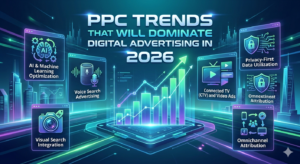
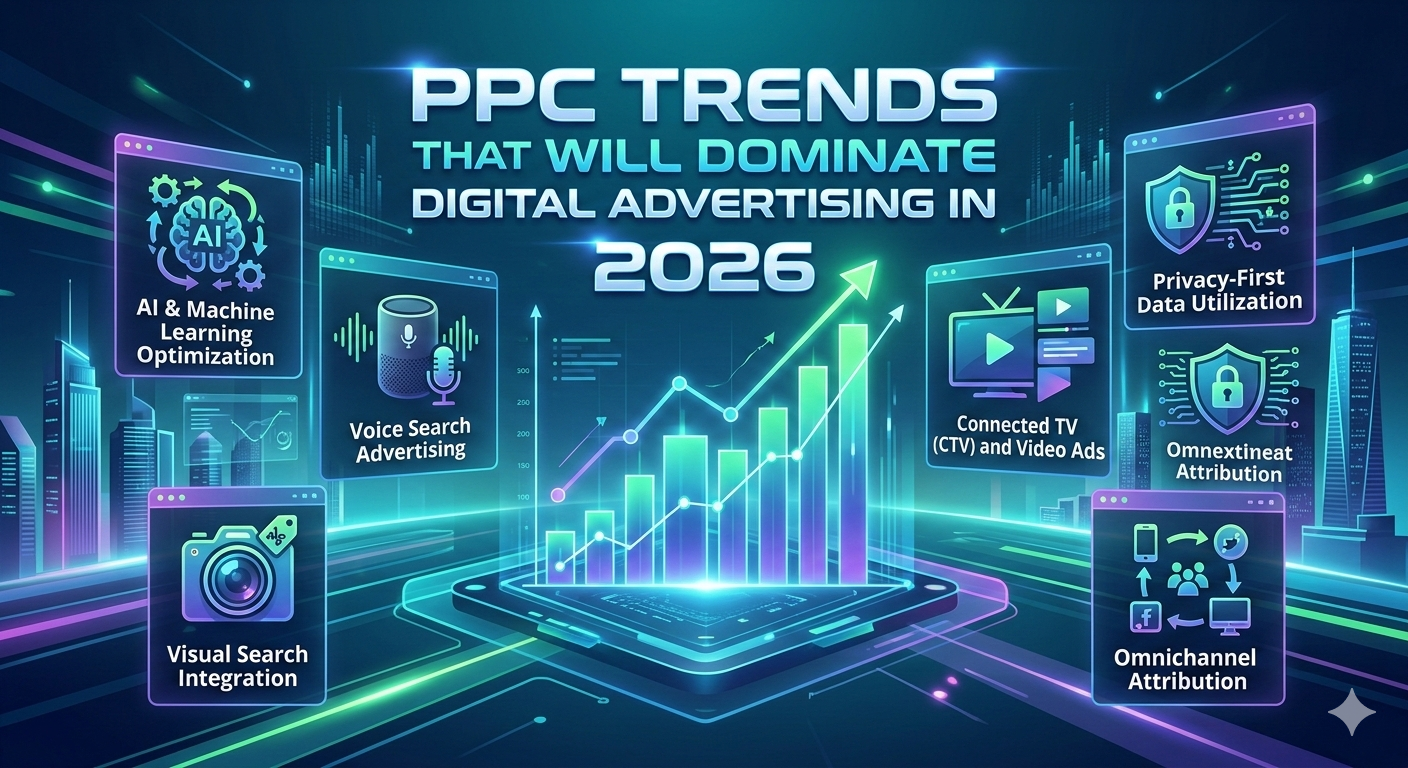
Top PPC Trends That Will Dominate Digital Advertising in 2026
1. AI-Powered Campaign Automation
Artificial intelligence is transforming PPC management. Platforms are increasingly using AI to automate bidding, targeting, and creative optimization.
AI tools can analyse thousands of signals in real time, helping marketers improve campaign performance while reducing manual work.
Key AI applications in PPC include:
- Smart bidding strategies
- Automated ad copy generation
- Predictive audience targeting
- AI-driven performance insights
AI-driven campaigns often produce higher ROI and improved conversion rates compared to manually managed campaigns.
2.Performance Max Campaigns Becoming the Standard
Performance Max campaigns are gaining popularity because they allow advertisers to run multi-channel campaigns from a single campaign structure.
These campaigns automatically distribute ads across:
- Search networks
- Display networks
- Video platforms
- Shopping ads
- Discovery feeds
Performance Max campaigns rely heavily on machine learning to optimize ad placements and maximize conversions.
Understanding Performance Max campaigns is an important part of modern PPC training in most digital marketing certification programs at School of Digital Marketing.
3.First-Party Data Will Replace Third-Party Cookies
With growing privacy regulations and the phase-out of third-party cookies, first-party data will become the backbone of PPC targeting.
Businesses will rely more on:
- CRM data
- Email subscribers
- Website visitor behaviour
- Customer purchase history
Using first-party data allows marketers to create highly personalized advertising campaigns while complying with privacy regulations.
4.Voice Search Advertising Growth
Voice assistants and smart devices are increasing voice-based searches. As a result, PPC strategies must adapt to conversational search queries.
Voice search queries tend to be:
- Longer
- Question-based
- Conversational in tone
To capture voice traffic, advertisers need to optimize campaigns for long-tail keywords and natural language phrases.
5.Video Ads Will Dominate PPC Campaigns
Video content continues to outperform traditional display ads. Short-form video ads are particularly effective for capturing attention and driving engagement.
Popular PPC video formats include:
- Short video ads
- In-stream video ads
- Shoppable video ads
- Interactive video ads
Video ads help brands deliver highly engaging storytelling experiences, leading to better click-through rates and conversions.
6.Predictive Analytics for Smarter Ad Targeting
Predictive analytics uses machine learning to forecast future user behaviour based on historical data.
This allows marketers to:
- Identify high-intent audiences
- Predict conversion likelihood
- Optimize ad timing
- Allocate budget more efficiently
Predictive targeting helps businesses maximize ad performance while reducing wasted spend.
7.Hyper-Personalized Ads
Consumers increasingly expect personalized experiences from brands. PPC platforms now allow advertisers to deliver dynamic and personalized ads based on user behaviour.
Personalization can include:
- Location-based ads
- Personalized product recommendations
- Dynamic ad creatives
- Customized messaging
Hyper-personalization improves engagement, click-through rates, and conversion rates.
8.Visual and Image-Based Search Ads
Visual search technology enables users to perform searches using images rather than text.
Advertisers can leverage this trend through:
- Shopping ads
- Image-based search results
- Visual product discovery campaigns
Visual search makes it easier for consumers to discover products and can significantly improve e-commerce conversion rates.
How Businesses Can Prepare for PPC in 2026
To stay competitive, businesses must adapt their advertising strategies to emerging PPC trends.
Key steps include:
- Invest in AI-powered advertising tools
- Build strong first-party data strategies
- Experiment with video and interactive ads
- Optimize campaigns for voice search queries
- Focus on data-driven campaign optimization
Businesses that embrace these trends early will gain a significant competitive advantage in digital advertising.
Want to Learn PPC Advertising Practically?
Join the Digital Marketing Course at School of Digital Marketing and gain hands-on experience
People Also Ask (PAA)
What is the future of PPC advertising?
The future of PPC advertising will be driven by AI automation, predictive analytics, and privacy-focused targeting. Advertisers will rely more on machine learning to optimize campaigns while using first-party data to personalize ads and maintain compliance with privacy regulations.
Why is AI important in PPC marketing?
AI improves PPC performance by automating bidding strategies, analyzing audience behavior, and optimizing ad placements in real time. This allows marketers to make data-driven decisions and improve campaign ROI while reducing manual campaign management.
How will privacy regulations affect PPC advertising?
Privacy regulations are reducing the availability of third-party tracking data. As a result, advertisers must rely more on first-party data, contextual targeting, and consent-based marketing to deliver relevant ads while respecting user privacy.
Are video ads effective for PPC campaigns?
Yes. Video ads are one of the most effective PPC formats because they capture attention quickly and communicate messages visually. They often generate higher engagement, better brand recall, and improved conversion rates compared to static ads.
What role does automation play in PPC campaigns?
Automation helps marketers manage campaigns more efficiently by optimizing bids, adjusting budgets, and improving targeting automatically. This allows advertisers to focus on strategy and creative development instead of manual campaign adjustments.
How can small businesses benefit from PPC trends?
Small businesses can leverage PPC trends by using AI-powered campaign tools, local targeting, and personalized ads. These strategies help them compete with larger brands while maximizing their advertising budget and reaching high-intent customers.
Conclusion
PPC advertising is entering a new era driven by AI, automation, data privacy, and personalized experiences. Businesses that adapt to these trends will be able to run more efficient campaigns and reach highly targeted audiences.
By leveraging AI automation, first-party data, video advertising, and predictive analytics, marketers can build powerful PPC strategies that deliver stronger results in 2026 and beyond.